Carbon Capture
Carbon Capture
Key Takeaways
- CO₂ separation (carbon capture) reduces industrial CO₂ emissions directly at source by technically separating carbon dioxide from flue gas streams.
- The CONENGA Group focuses on retrofittable post-combustion technologies for existing biogenic-fired plants.
- Market-ready amine scrubbing technology enables high CO₂ separation rates, but is energy-intensive in comparison with demanding purity requirements and involves high investment costs due to the complex plant structure. Additional emissions are also caused by amine solutions.
- The CONENGA Group continues to develop and investigate adsorption processes such as Temperature Swing Adsorption (TSA) for energy-efficient CO₂ separation.
- Data analysis, site evaluation and process engineering design are key prerequisites for cost-effective carbon capture solutions in industrial plants.

Nora Fricko
I am looking forward to answering your questions
Nora Fricko is your expert when it comes to carbon capture!
Why CO₂ capture?
The challenges of climate change require decisive action. Achieving the 1.5°C target of the Paris Climate Agreement requires not only emission reductions, but also negative emissions – i.e. the active removal of CO₂ from the atmosphere. The CONENGA Group is working intensively on both approaches – with a particular focus on technical carbon capture.
The thermal utilization of fossil fuels unbalances the natural carbon cycle. CO₂ accumulates in the atmosphere and increases the greenhouse effect, making the earth warmer and warmer. As heat and energy generation, including through combustion processes, remain necessary, CO₂ capture offers a key opportunity to reduce emissions directly at source – especially in industrial plants.
The CONENGA Group develops and evaluates technical solutions for CO₂ capture for existing industrial and energy plants with a focus on retrofitting and energy efficiency.
Terms & Abbreviations:
CC: Stands for Carbon Capture (the process of capturing or separating CO₂ at the source).
CCS: Stands for Carbon Capture and Storage (capture and permanent underground storage).
CCU: Stands for Carbon Capture and Utilization (capture and subsequent use of CO₂ as a raw material).
CCUS: Stands for Carbon Capture, Utilization, and Storage (a combination of utilization and storage).
What is CO₂ capture?
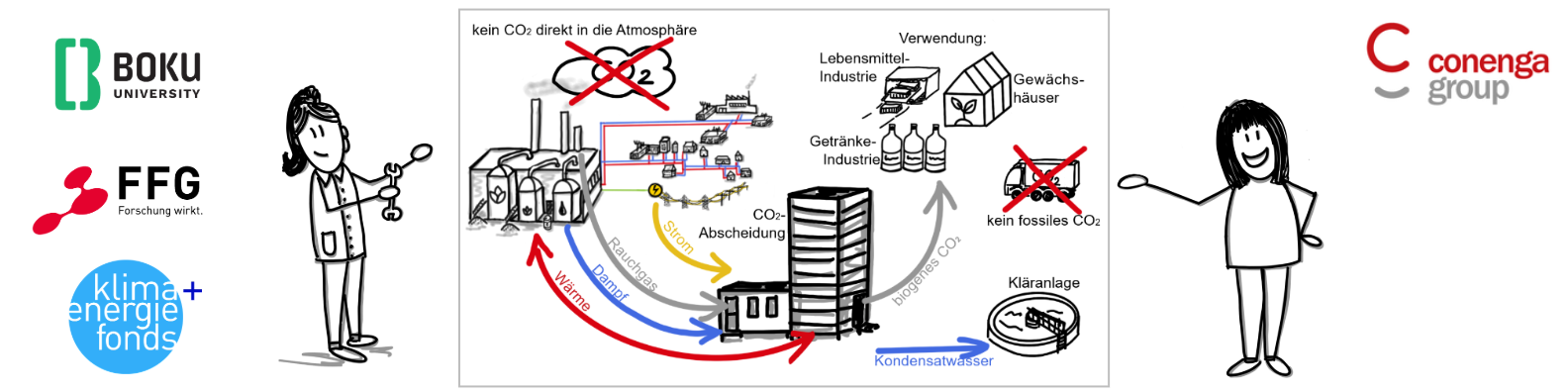
CO₂ separation or carbon capture describes the technical removal of carbon dioxide from flue and exhaust gas streams from industrial processes. The aim is to reduce CO₂ emissions directly at the source and thereby support decarbonization targets. Retrofittable post-combustion processes for existing energy and industrial plants are particularly relevant. The CONENGA Group supports companies with analysis, technology selection, plant evaluation and the development of technical solutions for CO₂ capture in biogenic-fired plants.
Would you like to find out more?
Our focus: carbon capture for biogenic plants
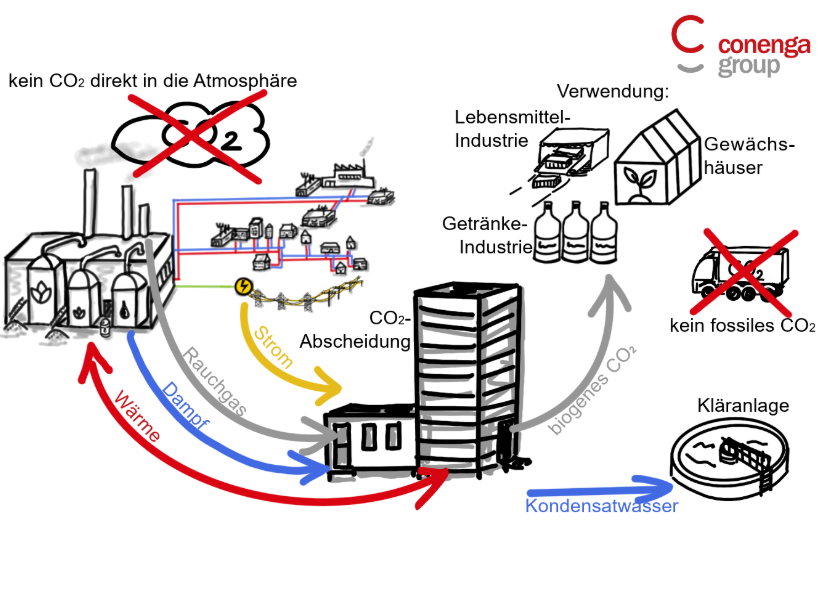
The CONENGA Group specializes in retrofitting and optimizing CO₂ capture technologies in biogenic-fired plants. Our engineering teams analyze individual site conditions and develop tailor-made solutions.
Our core technologies
CO₂ absorption (amine scrubbing)
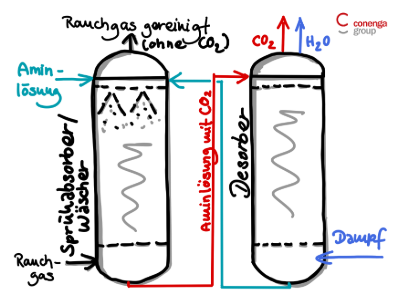
Amine scrubbing is the most established process for CO₂ separation. The CO₂ reacts with an amine solution and is separated and released in two steps (absorber and stripper).
Advantages:
- High separation efficiency
- Industrially proven and available
Challenges:
- Relatively high energy requirement, especially with high purity requirements
CO₂ adsorption (TSA)
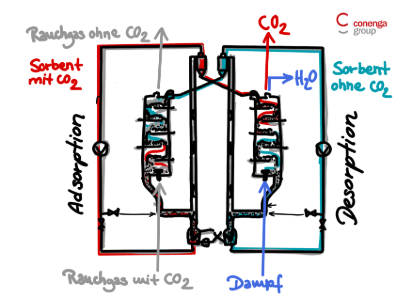
In TSA technology, CO₂ is bound to solids by adsorption and released again by increasing the temperature in the desorber column. The CONENGA Group continues to develop TSA systems for industrial applications.
Features:
- High potential energy efficiency
- Use of flexible sorbents
- Configuration as fluidized bed or fixed bed reactor
This technology is currently still in the development phase, but shows great potential for industrial applications with high purity requirements.
Further information:

Your technology partner for CO₂ capture
With comprehensive expertise in process engineering, energy technologies and project implementation, the CONENGA Group offers holistic solutions for carbon capture – from analysis to implementation. Together with our customers, we shape the path to decarbonization.
Further information:


Development and innovation
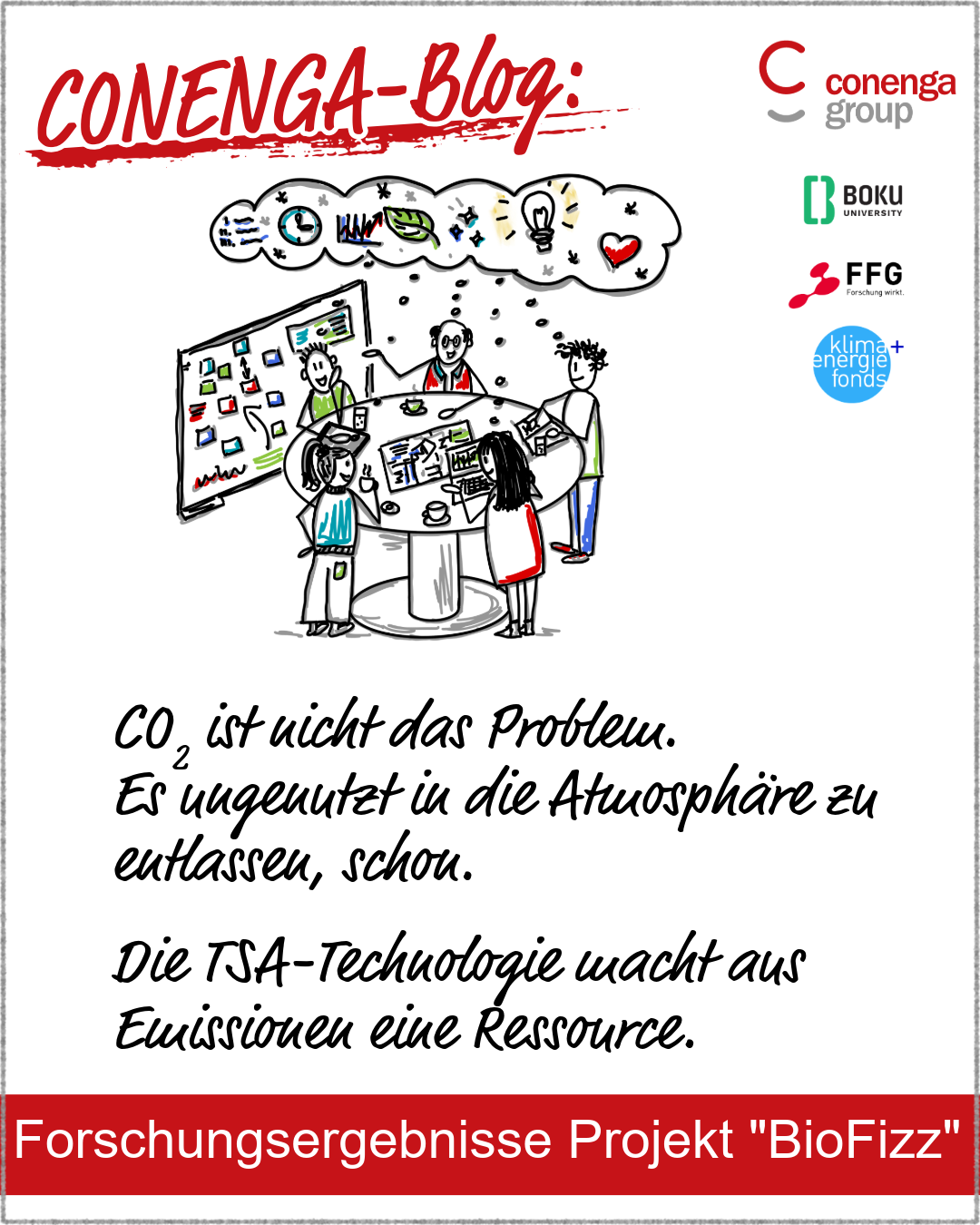
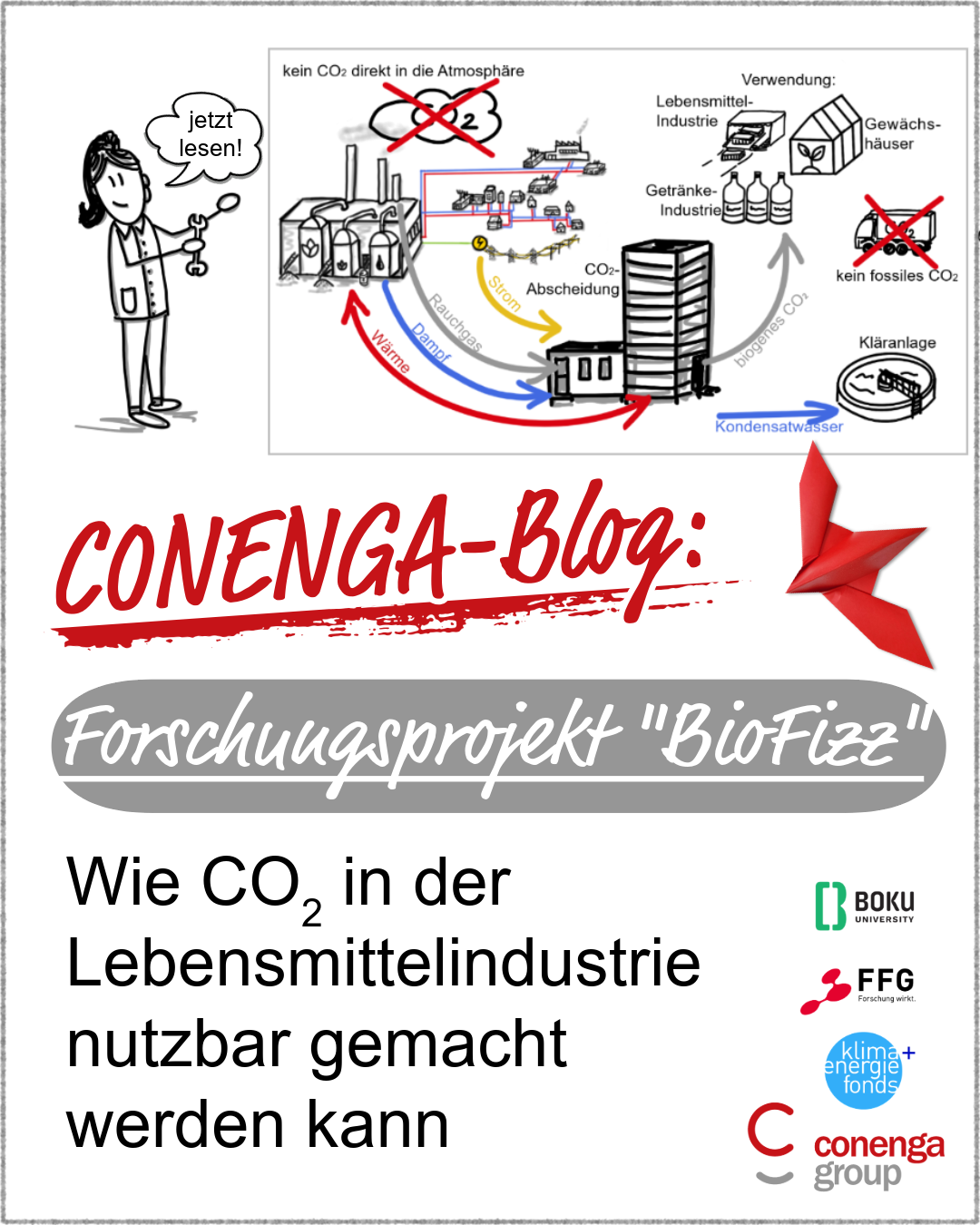 The CONENGA Group is involved in various research projects for the further development of adsorption processes and alternative carbon capture technologies. Our aim is to give our customers access to sustainable solutions at an early stage.
Read more about this in our blog posts!
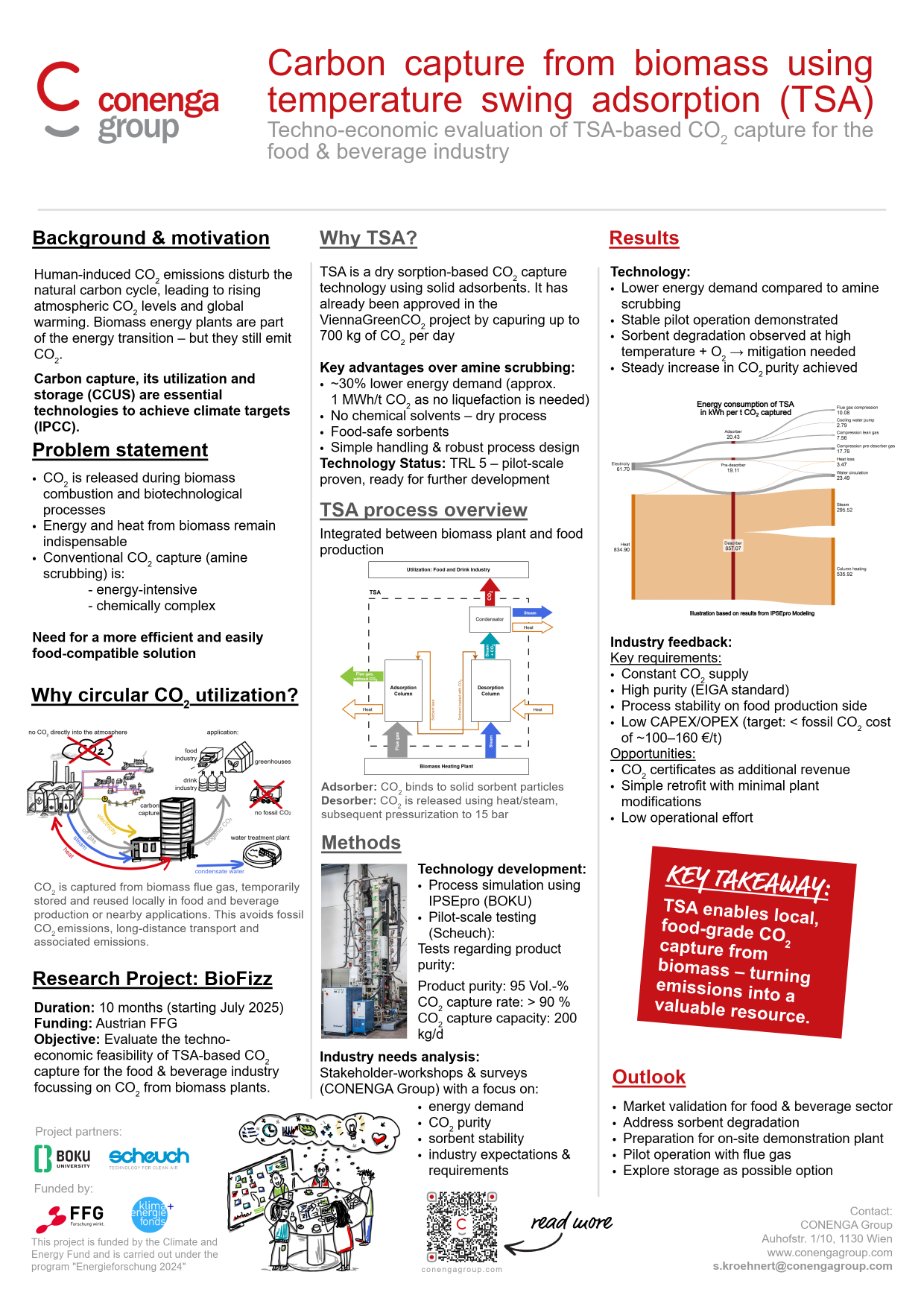
We presented our TSA project at the CEBC 2026 in Graz
FAQ about CO₂ capture

News




Unsere Kunden