Potential studies
Potential studies
Key Takeaways
- Feasibility studies serve as a technical health check for a facility and identify opportunities for optimization before they lead to concrete problems.
- The CONENGA Group analyzes process and control design degrees of freedom in order to systematically evaluate efficiency potential.
- Historical process data and supplementary measurements provide the basis for well-informed technical decisions and investments.
- Many improvements can already be achieved through optimized operating strategies and controller tuning without major modifications.
- The CONENGA Group evaluates potential on a vendor-neutral basis and develops technically feasible recommendations for action.

Your system is running smoothly. But is it running optimally?
With a potential study from CONENGA, you can make hidden efficiency reserves visible – and turn them into measurable results.
You recognize where energy is being lost, processes are unstable or controls are not working optimally – and receive concrete, economically evaluated measures for improvement.
Independent. Data-based. Realizable.
Many systems work reliably – and yet remain below their actual potential.
Over the years, adjustments, changes in operating methods or structures that have developed over time create inefficient conditions that are barely visible in everyday life.
This is exactly where CONENGA comes in: We analyze your real process data, identify hidden losses and clearly show you which measures will make your system measurably more efficient, stable and economical.
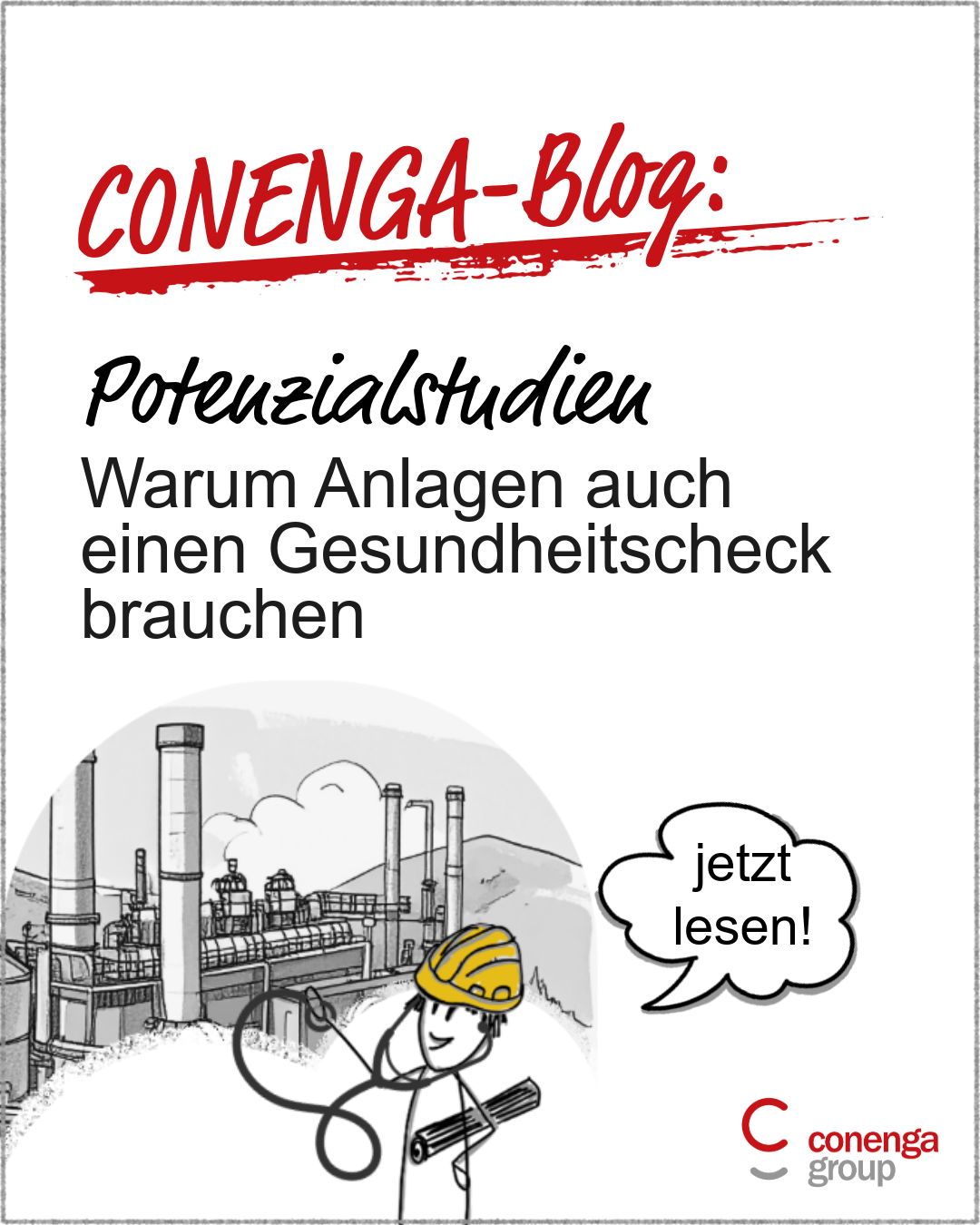
The CONENGA Group views potential studies as a technical health check that identifies opportunities for optimization and enables well-informed decisions.


Independent. Objective. Manufacturer-neutral.
CONENGA works completely independently of system manufacturers and component suppliers. This independence ensures that all recommendations are based exclusively on technical analysis and economic evaluation. The focus is always on the best solution for your system – not on a specific product or system.
Interaction between process engineering and control
A key success factor lies in the joint consideration of process engineering and control engineering.
Through the detailed analysis of historical process data, we identify inefficient operating points, energy losses and unused potential. If these are specifically addressed, not only will efficiency improve, but also the stability and quality of your processes.
At the same time, we examine the control performance of the system. Parameters, dynamics and the behavior of individual control loops provide information on how stable and efficient a system is actually operated.  Through targeted controller tuning alone, we make processes significantly more stable, robust and efficient.
Added value that can be seen directly in operation.
The effect of a potential study is immediately noticeable during operation. Optimized process management leads to lower energy consumption, more stable processes and improved product quality.
At the same time, emissions and operating costs are reduced, while the overall cost-effectiveness of your system is sustainably improved.
In this way, a potential study not only contributes to technical optimization, but also makes a direct contribution to the company’s competitiveness.
Particularly relevant for energy and process systems
We often find considerable optimization potential, especially in energy and process systems. The analysis makes it possible to reduce internal energy requirements, optimize combustion processes and improve control strategies. At the same time, you can reduce emissions and increase operational safety. We often come across“low hanging fruits” – potential that can be leveraged directly and have an immediate impact.
We also evaluate further developments, such as the use of heat pumps, storage solutions or power-to-heat concepts.
Structured process – efficiently implemented
Our potential studies follow a follow a clearly defined process and are usually completed within around six weeks of the client providing the complete data.
After a joint online kick-off, the relevant data points are defined and the required process data is transferred. Based on this, we prepare an analysis and initial assessment.
During an on-site appointment, the results are compared with the actual system situation, supplemented and discussed with you. Based on this, we create a structured report with clearly prioritized measures and an economic assessment.Finally, we present the results to you in a comprehensible form – either in person or online, as required.
Data basis and analysis quality
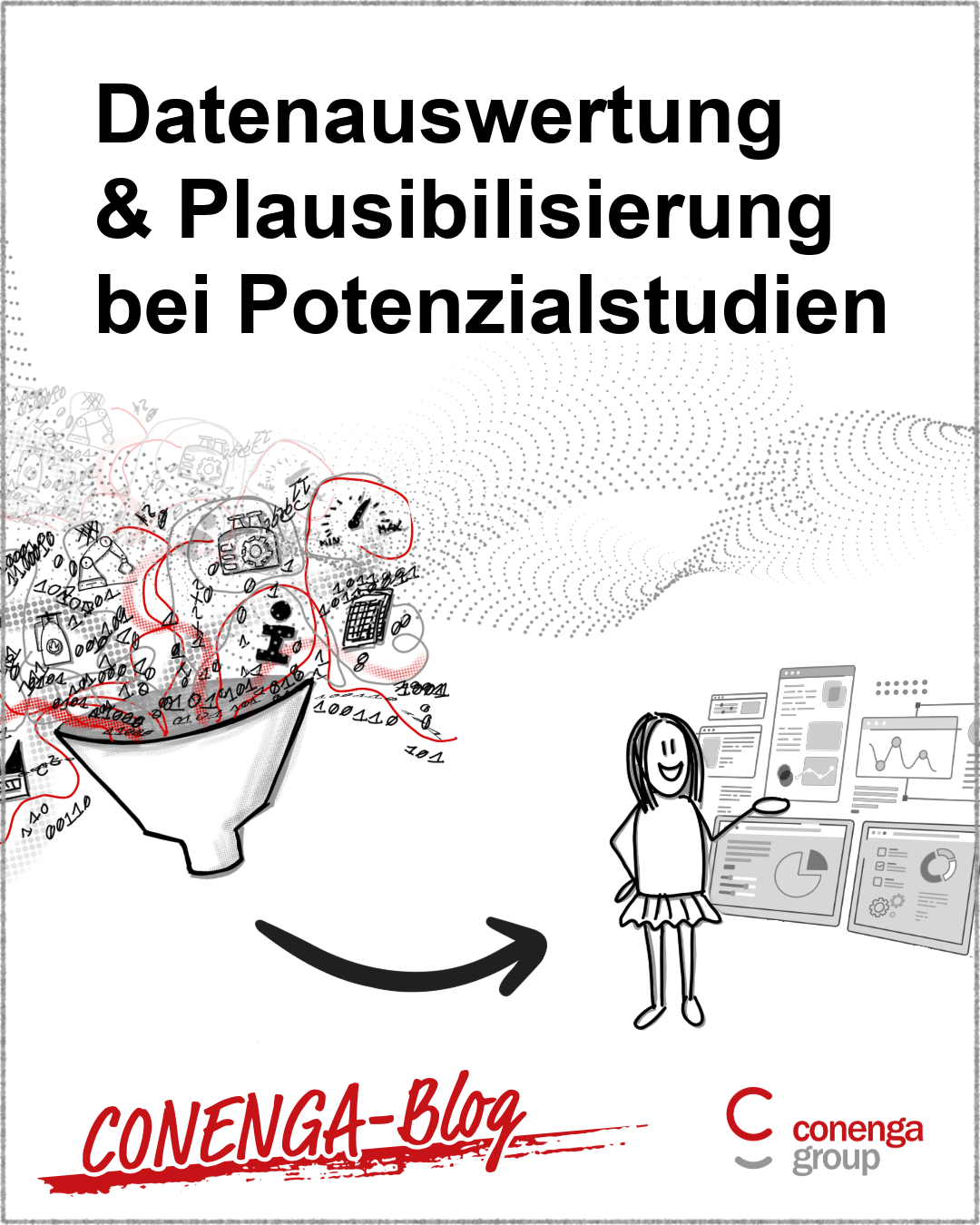
The quality of the results depends largely on the available data basis. As a rule, several dozen measured values from the process control system are evaluated. The higher the temporal resolution of this data, the better dynamic correlations and control behavior can be analyzed.
The data can be provided in standard formats; direct access to the control system is not required. If required, we can also carry out our own measurements to investigate specific issues in greater depth.
Transparency as the basis for trust
A potential study is only valuable if its results are comprehensible and reliable.
For this reason, all findings are derived on a technically sound basis, presented in a clearly structured manner and economically evaluated. Our aim is not only to identify potential, but also to deliver concrete and practicable measures. The implementation is carried out in close coordination with your company. The operation of the system remains with the shift personnel at all times; there is no intervention in ongoing operations. To validate promising potentials, we can design target-oriented tests with modified operating parameters in consultation with the plant operator, which your operating personnel will carry out. 
The confidential handling of your data is a matter of course for us and is safeguarded by corresponding agreements.
Further information:






Would you like to find out more?
How much potential is there in your system?
Many optimization opportunities remain invisible in everyday life – not because they don’t exist, but because they are difficult to grasp without targeted analysis.
A potential study by CONENGA provides clarity here: we show you where your system stands today, what potential is available and which measures are economically worthwhile.
Let’s work together to reveal the full potential of your system!
FAQ on Potential Studies


Unsere Kunden