Calcination
Calcination
Key Takeaways
- Calcination is a central thermal process for converting carbonates into oxides and plays a key role in the cement, magnesium and metal industries.
- The process is energy-intensive and places high demands on combustion, plant technology and process control.
- Challenges arise from fuel selection, emissions (CO₂, NOx, CO) and process stability.
- The CONENGA Group optimizes calcination processes through burner, combustion chamber and fuel adjustments as well as data-based analysis.
- CONENGA develops customized, sustainable solutions that increase efficiency, reduce emissions and improve economic performance.
Bernhard Kronberger
The CONENGA Group optimizes calcination processes by combining combustion optimization, data analysis and tailor-made engineering solutions.
Calcination is a thermal process in which materials are heated to high temperatures in order to trigger chemical reactions such as the decomposition of carbonates. This results in products such as metal oxides and CO₂, which are required in many industrial processes. The CONENGA Group optimizes calcination processes by specifically adapting combustion, energy input and process control.
Carbonates containing calcium and magnesium decompose when heated. The resulting products, such as magnesium oxide and carbon dioxide (CO2), are essential charge materials in various industrial processes especially in the cement and magnesium production as well as the production of high-quality metal oxides. Our expertise at CONENGA Group enables you to design such processes efficiently and sustainably.
I am looking forward to answering your questions
Bernhard Kronberger is your expert when it comes to calcination!

Calcination
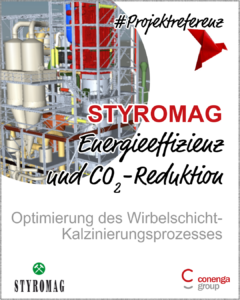
Calcination is identified as key process of cement and magnesium production. Depending on the type of application, the equipment differs: whereas rotary kilns are widespread, for special applications such as the production of MgO fluidized bed reactors (e.g. STYROMAG AG, project report) are considered more suitable.
As the main challenge of the process is incredibly high primary energy consumption, our consumption-based approach focusses on burner and combustion chamber optimization as well as adaptations in fuel mixture (RDF). Related to implementation of substitute fuels, issues on the emissions of CO, NOx etc. arise frequently. Keeping an eye on economic performance, CO2 emissions are decisive.
We consider every issue as a specific challenge and therefore stress the importance of developing individual, customized and sustainable solutions. Innovation work is risk inherent; however, our team shares the vision and the ability to handle complexity and novelty in a methodically sound manner. We rely on a structure of well-approved work phases with precise milestones.
Regardless of whether you already have specific issues to address or just started idea phase or concept development – we are happy to support you in an initial exchange. We look forward to hearing from you!
Further information:



Calcination
Calcination is identified as key process of cement and magnesium production. Depending on the type of application, the equipment differs: whereas rotary kilns are widespread, for special applications such as the production of MgO fluidized bed reactors (e.g. STYROMAG AG, project report) are considered more suitable.
As the main challenge of the process is incredibly high primary energy consumption, our consumption-based approach focusses on burner and combustion chamber optimization as well as adaptations in fuel mixture (RDF). Related to implementation of substitute fuels, issues on the emissions of CO, NOx etc. arise frequently. Keeping an eye on economic performance, CO2 emissions are decisive.
We consider every issue as a specific challenge and therefore stress the importance of developing individual, customized and sustainable solutions. Innovation work is risk inherent; however, our team shares the vision and the ability to handle complexity and novelty in a methodically sound manner. We rely on a structure of well-approved work phases with precise milestones.
 Regardless of whether you already have specific issues to address or just started idea phase or concept development – we are happy to support you in an initial exchange. We are looking forward to hearing from you!
Further information:
Unsere Kunden