Waste incineration plants
Waste incineration plants
Key Takeaways
- The optimization of waste incineration plants requires close coordination of process engineering and control technology.
- The central levers are firing rate control, fuel supply, air management, flue gas cleaning and emission control.
- Modern control systems enable stable plant operation even with strongly fluctuating substitute fuel quality.
- Die CONENGA Group analysiert Betriebsdaten, identifiziert Optimierungspotenziale und entwickelt maßgeschneiderte Regelungs- und Prozesskonzepte.
- CONENGA setzt Optimierungen im laufenden Betrieb um und steigert Effizienz, Verfügbarkeit und Emissionsperformance von Abfallverbrennungsanlagen nachhaltig.
Bernhard Kronberger
The optimization of waste incineration plants requires very specific expertise and a great deal of experience. The aim is to optimally combine process technology with control engineering. CONENGA Group optimizes waste incineration plants through the intelligent combination of process engineering, data analysis and control technology.
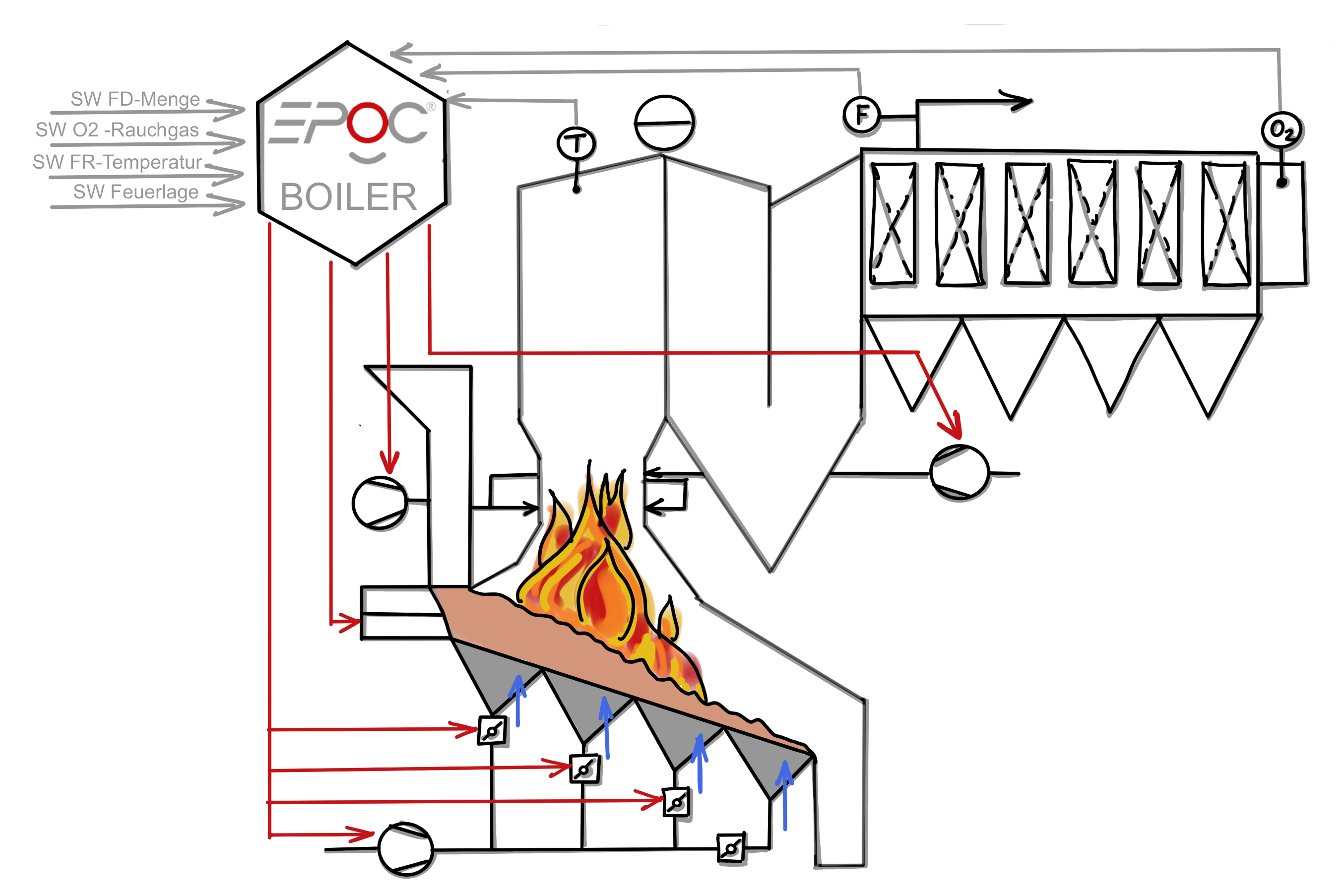
The important aspects are the firing rate control, the fuel supply, the entire air management (air preheating, primary air, secondary air, recirculation), the emissions and, depending on the focus, the TOC value (total organic carbon).
Our services combine in-depth knowledge of standard plant design and the associated strengths and potential, as well as extensive data evaluation, trend analyses and the corresponding interpretation of process engineering optimization options.
Our specialization in this associated process and control engineering process optimization during operation nevertheless guarantees uninterrupted operation during the implementation of our optimizations and therefore uses defined revision windows for adaptations.
We ensure compliance with the official emission limits. You benefit from stable combustion process control and higher overall efficiency as a result of our intelligent control systems (EPOC®). We achieve stable operation of your plant even with heterogeneous fuel. The CONENGA Group ‘s control systems are designed for all common boiler types and sizes.
The important aspects to be considered when harmonizing process technology with control technology are the firing rate control, the fuel supply, the entire air management (air preheating, primary air, secondary air, recirculation), the emissions and, depending on the focus, the TOC value (total organic carbon).
Performance overview
- Process engineering plant analysis with focus on efficiency, emissions, TOC and overall performance
- Data analysis (e.g. second data over several years of operation)
- Conception of plant engineering optimizations (combustion chamber, air system, firing position, grate, fluidized bed nozzles)
- Optimization of the control of the entire plant (performance & waste throughput)
Your advantages
- Increased efficiency of the firing system, minimisation of flue gas losses
- Automated management of large fuel fluctuations (calorific value, bulk density, water content, ash content)
- Prediction systems for optimum plant operation (including prediction systems for district heating consumption)
- Optimized driving style
- Minimization of the plant’s own energy demand
- Minimization of emissions (CO, NOx, SO2, HCl, NH3, dioxins, dust, …)
- Integration into plant networks or decoupled operation in the case of plant networks
- Longer service life, reduced fluctuations in steam production
- Optimum economic efficiency of your plant
PFAS in waste incineration
PFAS enter waste streams via numerous everyday products and place special demands on incineration processes and waste gas purification due to their high chemical stability. This raises new technical and regulatory issues for plant operators, planners and engineering firms. As an engineering partner, we provide support in the evaluation, design and optimization of corresponding plant concepts. Our blog post on the PFAS problem in waste incineration provides an in-depth insight into current developments and solutions.
Would you like to find out more? Should we call you or would you like to receive further information by e-mail?


FAQ on waste incineration plants
Unsere Kunden