
Key Takeaways:
- The BioFizz research project successfully demonstrated the technical and economic feasibility of TSA technology for capturing (biogenic) CO₂ from the flue gases of biomass cogeneration plants.
- Through targeted process optimizations, energy consumption was reduced by nearly half compared to earlier prototype laboratory facilities.
- With netCO₂ capture efficiencies of up to 95%, the process offers great potential as a sustainable alternative to existing, more energy-intensive technologies.
- There isdemand for regionally produced biogenicCO₂, and additional long-term, secure storage (sequestration) will be essential for market success.
- Further development of the regulatory framework is still essential; bans on sequestration must be lifted, and robust certification systems and corresponding business models are currently being developed
BioFizz: From Research to Implementation—Key Project Findings
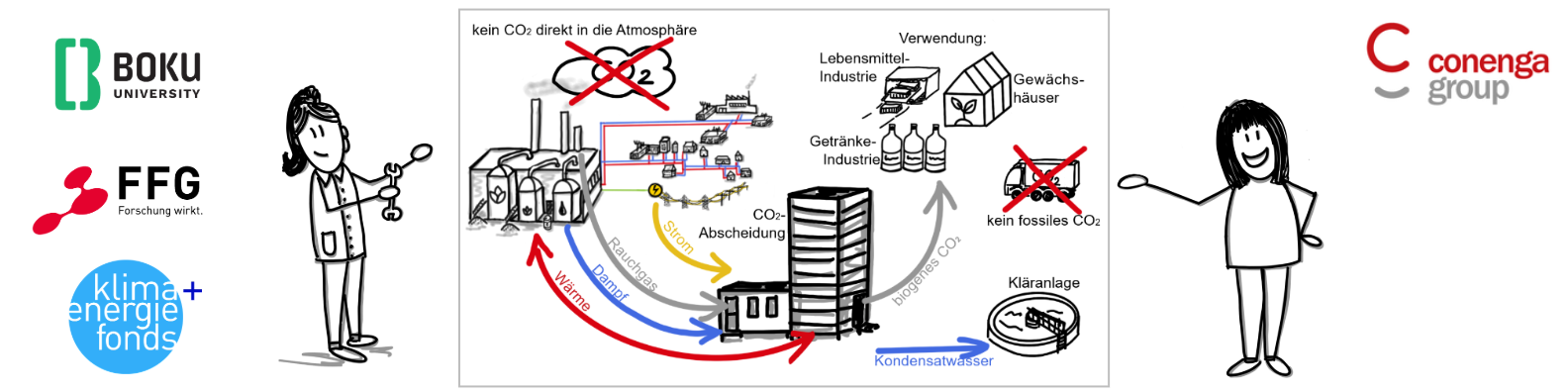
How can biogenicCO2 from biomass plants become a sustainable alternative to fossil carbon dioxide? The BioFizz research project has been addressing this question since its inception. Previous blog posts have already introduced the basics of Temperature Swing Adsorption (TSA) and the concept of supplying biogenicCO2 from biomass plants. With the BioFizz project now coming to a close, the focus is shifting to the results:
- What insights were gained?
- Where is the greatest potential?
- What steps are necessary to bring this technology into industrial use?
Background and Methods
The results clearly show that TSA technology not only works on a laboratory scale but also offers great potential for use in industrial applications. The project focused on the question of whether biogenicCO2 can be efficiently captured from biomass flue gases and produced in a quality that meets the requirements of the food industry.
The following methods were used for this purpose:
- Process Simulations
- Analysis of Experimental Data
- Needs analysis
The Results at a Glance
Energy efficiency has improved significantly
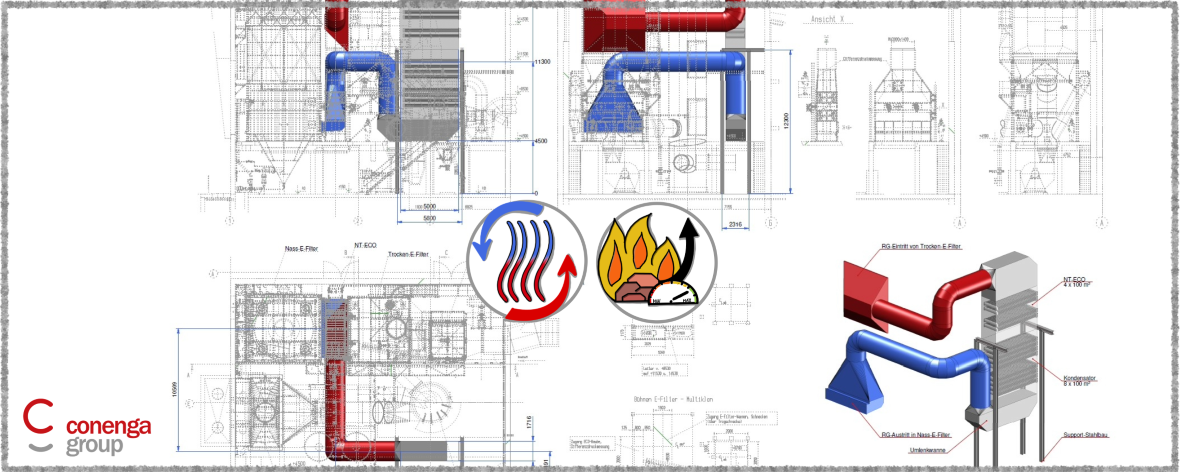
A key focus of the project was the energy optimization of the TSA process. BOKU therefore examined three real-world use cases—ranging from a demonstration plant producing approximately 3,000tCO2 per year to a large-scale industrial scenario producing 180,000tCO2 per year.
While the baseline scenario yielded a total energy requirement of 1.68 to 1.88MWh/tCO2, this was reduced to 0.84 to 1.04 MWh/tCO2. This allowed the thermal energy demand to be nearly halved. The electrical portion here amounts to only 0.04 to 0.17MWh/tCO2.
Favorable Environmental Impact ofCO2 Capture Using TSA
The environmental balance is also positive. Depending on the application, netCO2 efficiencies of up to 95% have been achieved. TheCO2 footprint of the capture process ranges from 32 to 53 kgof CO2 equivalent per metric ton of capturedCO2.
From the Laboratory Setup to Process Optimization
A key component of the BioFizz project was the further development of the existing TSA laboratory facility. At the start of the project, stable operation using steam was not yet possible due to condensation problems and insufficient separation of the gas chambers. Consequently, extensive test series were required to optimize the operating parameters and gradually validate the measures implemented. As part of this work, the separation of the gas compartments was improved, and additional measures were implemented to reduce oxygen and steam ingress. This stabilized plant operations and significantly improved the quality of the product gas.
A key finding: The pilot plant was ultimately able to operate for more than 600 operating hours under stable process conditions. During a one-week observation period, theCO2 content of the product gas remained constant at approximately 95% by volume.
Technology Meets the Market
In addition to technical development, the BioFizz project focused on the question of under what conditions biogenicCO2 can be used economically in the future. To this end, workshops and expert interviews were conducted with representatives from the biomass sector, the food and beverage industry, and the regulatory sector.
The feedback indicates that there is generally significant interest in regionally produced biogenicCO2. High product quality, reliable availability, and competitive costs are particularly important in this context. At the same time, it became clear that successful market entry does not depend solely on technology. Regulatory frameworks, certification systems, and suitable business models also play a decisive role in subsequent implementation.
Furthermore, the needs analysis showed that locations with both a supply of biogenicCO2 and regionalCO2 demand, in particular, offer great potential for regional value chains.
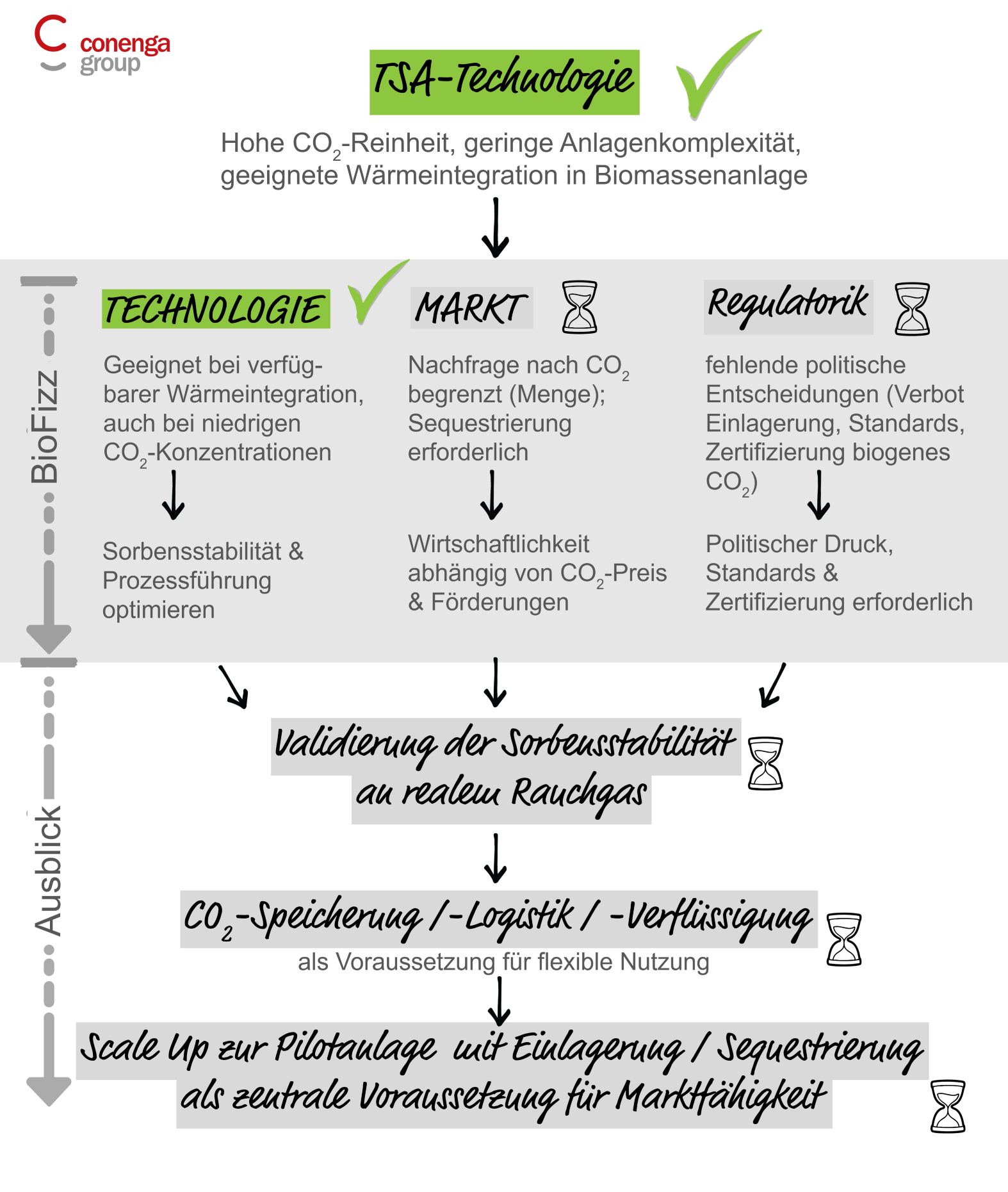 Outlook
With BioFizz, the technical feasibility of TSA technology was successfully demonstrated, and important insights were gained for process optimization.
The next step in development is to test and determine the sorbent’s stability under real operating conditions (flue gas from biomass heating and power plants).
Building on this, the focus shifts toCO2 storage and logistics, and, where applicable, liquefaction. This is a prerequisite for the flexible supply of captured carbon dioxide and enables the temporal decoupling of CO2 capture and consumption, or links the CO2 source to the CO2 sink.
This opens up new opportunities for regional value chains.
Alongside technological advancements, economic and regulatory conditions are also crucial for a successful market launch. The stakeholder and needs analysis conducted as part of the project shows that, in particular, competitiveCO2 costs, appropriate funding instruments, and clear quality and certification standards will significantly influence the future adoption of the technology. It goes without saying that the legal ban on permanent storage in Austria must be lifted for this to happen.
In the long term, the combination of TSA technology in an industrial-scale pilot plant,CO2 logistics, and regulatory requirements (certification) will form the basis for market viability and the creation of regionally functioningCO2 cycles.

Sabrina Kröhnert, MSc, war bis einschließlich Juni 2026 Process Engineer bei der CONENGA Group und spezialisiert auf Verfahrenstechnik mit Fokus auf nachhaltige Energie- und Umweltlösungen. Ihr Schwerpunkt lag auf der Optimierung thermisch basierter Energiebereitstellung und Energieverwendung sowie der Mitwirkung an Innovations- und Entwicklungsprojekten zur Steigerung von Effizienz und Nachhaltigkeit in industriellen Prozessen.
Ihr Masterstudium der Bio- und Umwelttechnik mit Schwerpunkt Umwelttechnik absolvierte sie an der FH Wels. Bereits während ihres Studiums sammelte sie umfassende praktische Erfahrung in Forschung und Industrie. Dazu zählen Tätigkeiten als wissenschaftliche Mitarbeiterin in den Bereichen Mikroalgenkultivierung und digitale Sensorsysteme zur frühzeitigen Erkennung von Waldstress, sowie ihre Bachelorarbeit im Bereich Deponiebau in Zusammenarbeit mit der PORR Umwelttechnik GmbH.
Weitere Praxiserfahrung sammelte sie als technische Mitarbeiterin bei der Fahrkraft Industrieplanungs- und Beratungs-GmbH. Durch ihre Kombination aus wissenschaftlicher Expertise und industrieller Anwendungskompetenz bringt sie fundiertes Know-how in den Bereichen Umwelttechnik, Energieeffizienz und nachhaltige Prozessoptimierung ein.
Nora Fricko aus dem Team der CONENGA Group steht Ihnen als Expertin für Fragen zum Thema CO₂-Abscheidung gerne zur Verfügung.