Plant Balancing
Plant Balancing
Key Takeaways
- Plant-level accounting enables a comprehensive analysis of energy and material flows in industrial plants.
- Mass and energy balances can be used to systematically identify losses, inefficiencies, and opportunities for optimization.
- The analysis of process data provides a solid foundation for technical and business decisions.
- Our experts prepare precise plant performance analyses and integrate them with simulations and control strategies to implement specific measures aimed at improving efficiency, reducing emissions, and optimizing costs.

Plant Balancing: Shaping technology for the future together!
Do you have a challenging problem that requires process engineering expertise, creativity and the ability to innovate? You are looking for a competent development and implementation partner for your concept ? The CONENGA Group uses plant balancing as a basis for making industrial processes transparent and optimizing them in a targeted manner.
We design a model to simulate different load cases and system configurations in order to process the plant balancing using process simulation. We compare the resulting energy balances according to the specifications and technical evaluation criteria (e.g. from the EU taxonomy).
We are looking forward to answering your questions
We are your experts concerning system balancing and innovations!
Would you like to find out more about Plant Balancing? Should we call you or would you like to receive further information by e-mail?
We create the necessary simulation models using the IPSEpro (SimTech) process simulation software, for example. The simulation makes it possible to efficiently calculate mass, energy and energy balances for process plants or plant components and to correlate various process parameters or illustrate the dependencies.
Material data for water, ideal gases, organic substances, solids, etc. as well as common components (pumps, compressors, heat exchangers, reactors, valves, etc.) are available in a model library or are developed if necessary. By combining these, it is possible to simulate complex processes at different levels of detail.
Plant Balancing: Our services
The input data is provided by the customer. Seasons are taken into account as required. This enables the simulation of summer and winter operating conditions with a supplementary profitability analysis.
The simulation model to be designed takes into account the existing relevant generation, conversion and consumption plants within the system boundaries under consideration. We simulate the load cases to be considered from the actual configuration or the desired configuration.
Typical input data for power plants
- Fuel compositions and heat outputs
- Steam mass flows in the form of produced steam, (un)converted steam and steam required for consumers
- thermal and electrical outputs or own consumption
- (maximum) generator outputs
- Further plant data such as efficiency, pipe dimensions and limits regarding flow rates, outputs, etc.
- specific marginal costs for the calculation of specific operating costs
Usual results of plant balancing
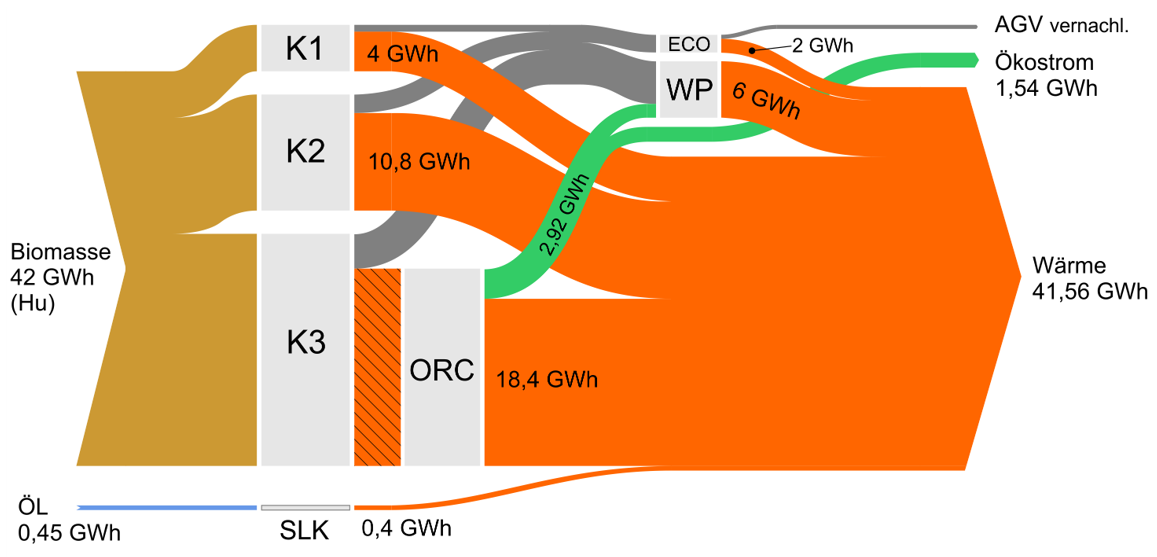
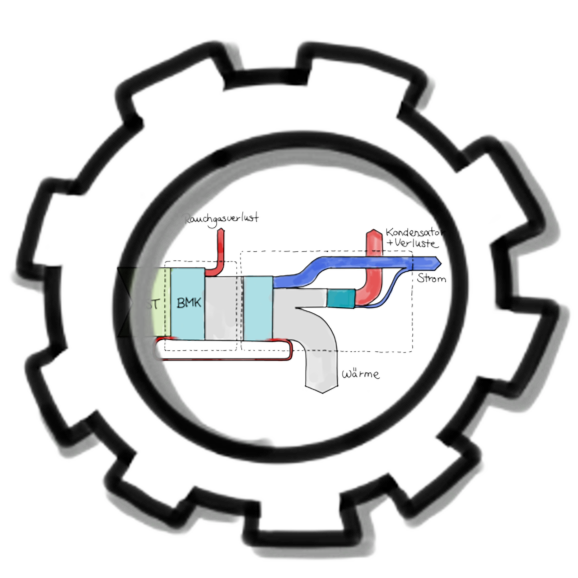
We present the results of the process simulation using selected load cases. These include cost diagrams (cost and revenue shares, cost difference summer to winter operation in percent), steam mass flow diagrams and an overall picture as Sankey diagrams, in which the thickness of the bars or flows reflects the outputs.



FAQ on plant balancing
Unsere Kunden