

Key Takeaways:
Key Takeaways
- A potential study is the technical health check of a system.
- Data analyses reveal hidden inefficiencies.
- Small optimizations can have big effects.
- Control and process engineering must be considered together.
- Independent analyses create an objective basis for decision-making.
Potential studies: Why plants – like people – need regular health checks
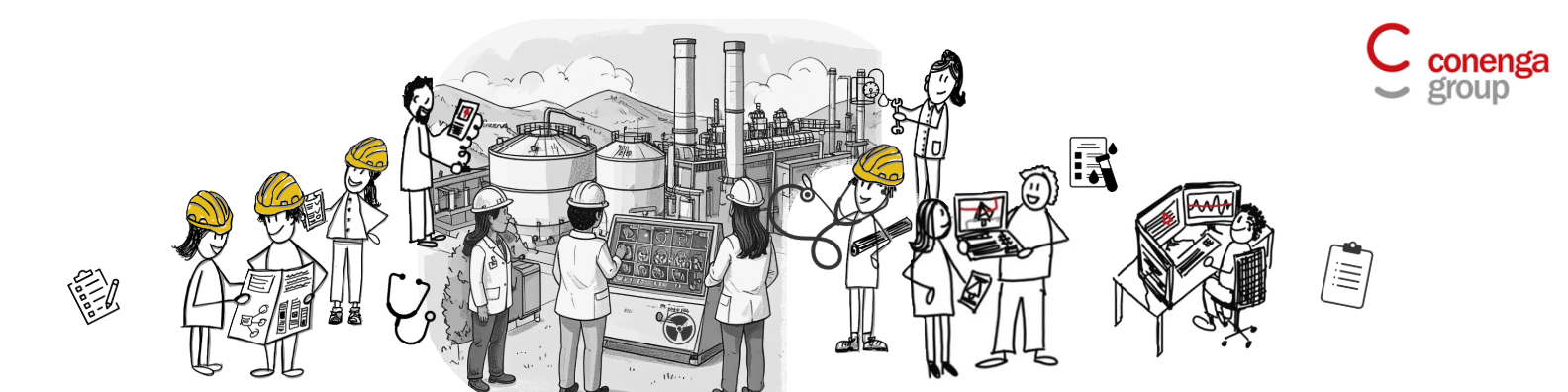
Many industrial plants run reliably for years. Production works, the energy supply is stable and the company knows its plant well. However, just as with people, the same applies to technical systems: Just because everything is currently working does not mean that everything is running optimally. This is why doctors recommend regular health checks – even if you feel healthy. Small abnormalities can be detected early before they become major problems.
A similar process is used for Potential study for process plants.
The health check for your system
A potential study can be thought of as a comprehensive technical health check. We don’t just look at individual key figures, but analyze the system as a whole:
-
How efficiently does the process work?
-
How stable are control loops set?
-
Where do unnecessary energy losses occur?
-
Which process engineering degrees of freedom are not yet being used?
The evaluation of historical process data and targeted measurements provide a clear picture of the actual system status. This allows weak points to be identified before they have a negative impact on efficiency, costs or operational safety.
Recognize symptoms before problems arise
In medicine, many diseases initially show only small signs: slightly elevated values, minimal deviations or non-specific symptoms. The situation is similar with technical systems.
Typical “symptoms” in system operation are, for example:
-
Oscillating control loops
-
Inefficient operating points
-
Unnecessary internal energy consumption
-
Creeping loss of efficiency
These effects are often barely noticeable in everyday life, but can lead to higher operating costs or more unstable processes in the long term. A potential study makes these connections visible.
Therapy: targeted optimization instead of major interventions
Another advantage of this approach: Often, no major conversions are necessary.
Many improvements can already be achieved through:
-
Optimized operating strategies
-
Adjusted controller tuning
-
Better use of existing process freedoms
reach.
This is comparable to medicine: small adjustments in behavior or targeted measures are often enough to significantly improve health and performance.
Independent diagnosis
As with a medical examination, an independent assessment is also important for technical analyses. CONENGA works completely independently of manufacturers. Our recommendations are based solely on technical analysis and economic evaluation – not on product interests. The aim is always to provide an objective diagnosis and a suitable solution for the system in question.
Precaution instead of reaction
Many operators only carry out a potential study when problems arise or major investments are planned. However, our experience shows that such analyses are particularly valuable as a preventative tool.
They help with this,
-
Recognize efficiency potential at an early stage
-
Plan investments more soundly
-
Reduce operating costs in the long term
-
secure competitiveness
Just like with a health check, if you look regularly, you will recognize changes earlier – and can react in a targeted manner.
Conclusion
A potential study is basically a health check for your plant. It shows where processes are already running optimally, where there is potential for improvement and which measures make economic sense. In other words: not every plant is sick – but almost every plant can be made healthier and more efficient

Dipl.-Ing. Richard Wipp ist Geschäftsführer und CEO der CONENGA Group und verantwortet seit 2020 den Aufbau, die operative Führung und die technische Entwicklung des Unternehmens. Sein Schwerpunkt liegt auf der Optimierung, Regelung und Digitalisierung von Energieanlagen, insbesondere Biomassekraftwerken, Reststoffverbrennungsanlagen und Fernwärmesystemen.
Mit über 20 Jahren Erfahrung im Engineering und in der praktischen Umsetzung komplexer Industrieprojekte verfügt er über umfassende Expertise in der Entwicklung und Implementierung innovativer Regelungs- und Optimierungslösungen für thermische Energieanlagen. Bereits 2007 gründete er die VOIGT+WIPP Engineers GmbH (heute CONENGA Engineers GmbH) und verantwortete als Geschäftsführer den operativen Aufbau und die technische Entwicklung des Engineering-Büros. 2013 folgte die Gründung der VOIGT+WIPP Energy & Environment GmbH (heute CONENGA Energy & Environment GmbH), die sich auf innovative Lösungen zur Effizienzsteigerung und Emissionsreduktion konzentriert.
Richard Wipp studierte Maschinenbau an der Technischen Universität Wien sowie an der Universidad Politécnica de Valencia in Spanien und verfügt über eine fundierte technische Ausbildung mit Schwerpunkt auf thermischen Prozessen und Energieanlagen.
Im Rahmen seiner Tätigkeit bei CONENGA verantwortet Dipl.-Ing. Wipp zahlreiche nationale und internationale Optimierungsprojekte für Verbrennungs- und Industrieanlagen, darunter KI-basierte Regelungssysteme, modellprädiktive Regelung (MPC), Emissionsoptimierung und Effizienzsteigerung komplexer Energieanlagen. Seine Arbeiten wurden unter anderem im Rahmen internationaler Fachveranstaltungen, Forschungsprojekte und Fachkreise im Bereich Wirbelschichttechnologie, Fernwärmesysteme und Anlagenoptimierung präsentiert.
Expertise
- Optimierung und Regelung thermischer Energieanlagen
- Biomassekraftwerke und Reststoffverbrennungsanlagen
- Advanced Process Control (APC) und modellprädiktive Regelung (MPC)
- Emissionsoptimierung und Effizienzsteigerung
- Digitalisierung und datenbasierte Prozessoptimierung
- Engineering und Implementierung komplexer Energieanlagen
Fokusbereiche bei CONENGA
- Optimierung von Biomasse- und Industrieanlagen
- Entwicklung und Implementierung intelligenter Regelungssysteme
- Emissionsreduktion und Effizienzsteigerung
- Digitalisierung und Advanced Process Control
- Engineering und technische Leitung von Optimierungsprojekten