

Key Takeaways:
- Operational backbone: Documentation is not a “necessity”, but essential for safety, efficiency and rapid troubleshooting.
- Structure through standards: VGB Guideline R171 provides the framework for a standardized documentation landscape that accompanies the life cycle.
- Structured organization: Clear labeling systems (e.g. KKS or AKS) create direct interfaces between trades and engineering.
- Digital management: DMS solutions ensure versioning and traceability to prevent “cobbling together” at the end of a project.
- Long-term value: A professional structure saves time and money on maintenance, conversions and revisions during operation.
More than a necessary evil – (plant) documentation
Why documentation is often underestimated
In many projects, the technical documentation of energy systems is seen as a necessary evil – a mandatory task that is often pushed to the end. Yet it is far more than just a pile of files: it forms the backbone for safe, efficient and sustainable plant operation. Whether for maintenance, incident analyses or conversions – clean documentation saves time, money and nerves.
Especially in complex system structures with long life cycles, documentation determines how quickly and reliably technical information can be accessed. This is precisely where VGB Guideline R171 comes in. It creates standards and brings structure to an often confusing documentation landscape. 
What is the VGB Guideline R171?
The VGB Guideline R171 was developed by the Technical Association of Energy Plant Operators(VGB Powertech e. V.) and regulates the requirements for the technical documentation of energy and industrial plants. It clearly defines which documents are to be created, to what extent and in what form. The aim is to create standardized, structured and easily accessible documentation that accompanies the entire life cycle of the system.
Practice instead of theory: implementation challenges
As sensible as the directive is, its implementation is challenging in practice. Typical challenges are
- Inconsistent file formats: PDF, Word, DWG, Excel – often wildly mixed, not versioned and sometimes no longer readable or modifiable by the system operator.
- Fragmented document structure: Storage on USB sticks, in e-mails or distributed on different servers.
- Lack of maintenance after commissioning: Documentation quickly becomes outdated if no processes are established for updating it – especially when systems are converted.
- Communication gaps between trades: Different suppliers work with different forms and scopes – without a common agreement, there is a lack of consistency in the records.
In our projects at the CONENGA Group, we often see documentation being “cobbled together” just before the project is completed. This leads to additional work, duplicate queries and, in the worst case, safety-critical gaps.
What good documentation can look like
Professional system documentation fulfills several criteria:
- Structure and modularity: clear chapter and file structure with unambiguous naming
- Completeness and traceability: All relevant documents are available, versioned and traceable
- Documentation management system (DMS): A (digital) DMS that uses metadata, for example, is usually useful and helps to ensure that documents are easy to find
- Maintainability: changes are incorporated and revisions are documented
Clear content structure as the foundation of the documentation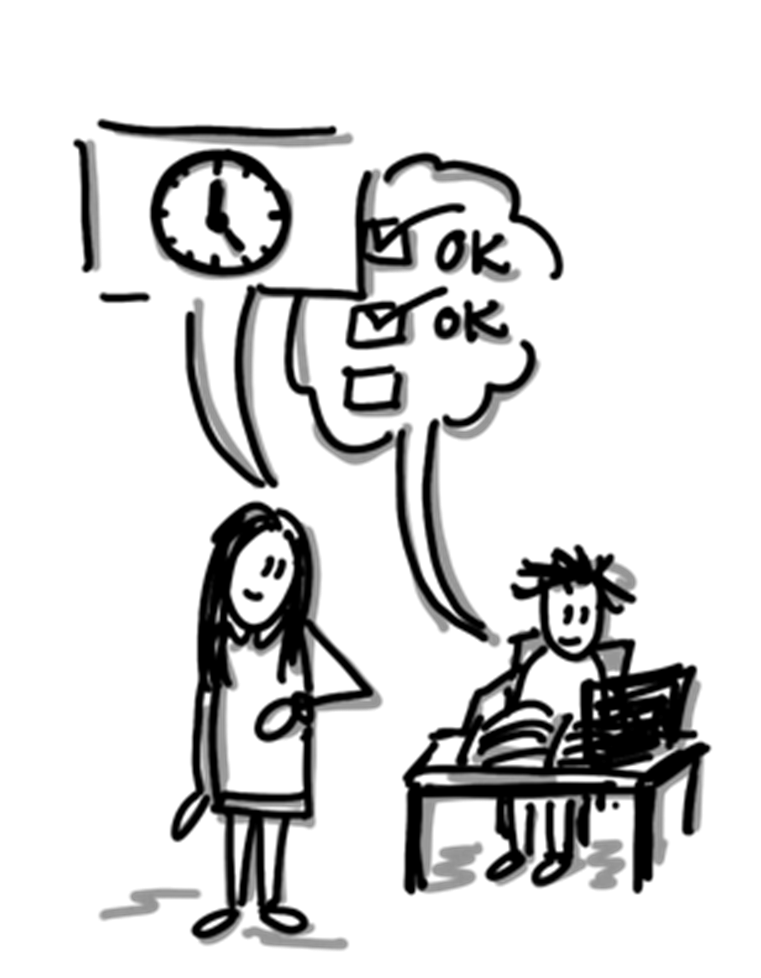
An often underestimated but central component of high-quality plant documentation is the content organization and clear structuring of the plant to be documented. This is not just about a clean folder structure, but also a clear technical demarcation:
What belongs to the system, where does a system begin or end, and which components are assigned to which part of the system?
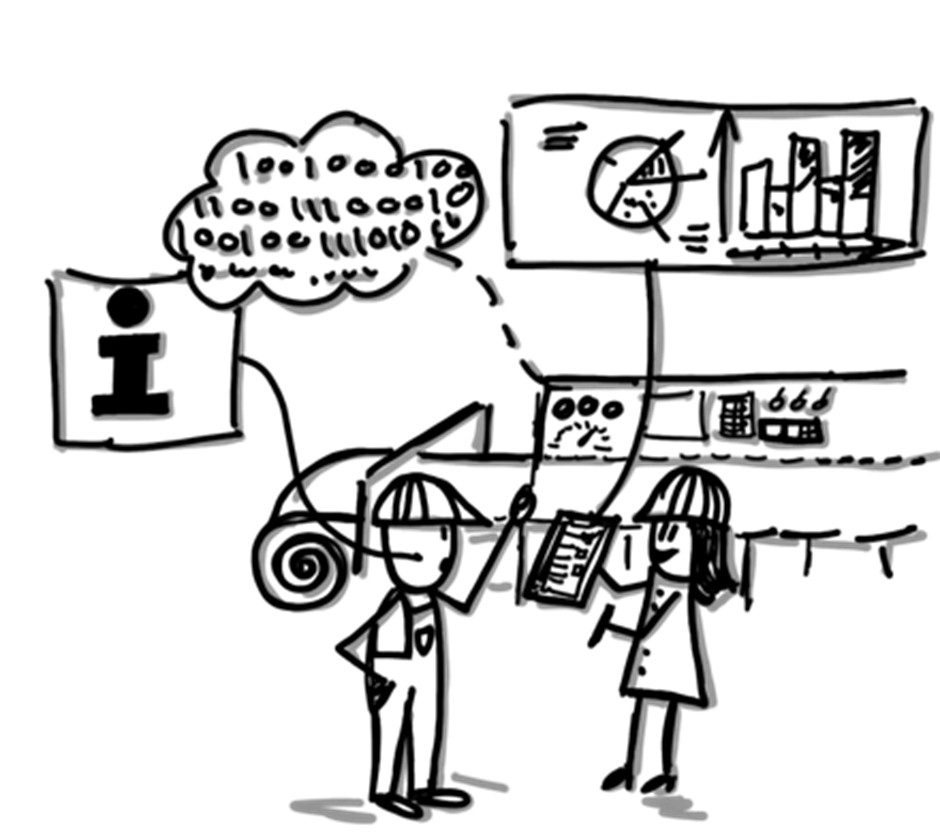 Such a structure is the basis for ensuring that documentation remains understandable, usable and permanently maintainable. It creates:
- Clear demarcations between plant components, systems and subsystems
- Clear interfaces between service providers, e.g. with several suppliers or trades
- Consistent structuring and numbering across all document types (plans, descriptions, lists)
- Clear assignment of documents, components and functions
This content structure is therefore not only relevant for the documentation itself, but also has a direct impact on the project: it reduces coordination effort, avoids overlaps and ensures that responsibilities are clearly defined.
In practice, it has proven to be a good idea to define the plant structure at an early stage and apply it consistently – ideally on the basis of established identification systems such as KKS (power plant identification system) or AKS (plant identification system). These systems support the clear identification of systems, functions and equipment and form a stable bridge between engineering, documentation, operation and maintenance.
What is important here: once the structure has been defined, it must be accepted and used by everyone involved. This is the only way to create consistent, contradiction-free documentation that can still be understood years later.
In our practice, the following basic structure (in different variants) has proven itself:
- Technical documentation divided into operating instructions, implementation documentation, quality certificates
- Approval documentation
- Operating documentation
Digitalization as a good helper
Today, digital documentation solutions make it easier than ever to create structure and transparency. A DMS enables versioning, approvals and powerful search functions. Documents can also be linked directly to maintenance systems or digital twins. This means that the documentation grows with the system and is always up to date.
How CONENGA can help:
Even though our core business is engineering, we encounter the topic of documentation in almost every project. It often becomes clear how much time is lost in everyday life due to incomplete or inaccessible documentation – be it during troubleshooting or conversions.
 With this in mind, we support our customers where it is crucial for the success of the project:
- Checking the content of technical documents: for example, whether descriptions or plans are consistent and logically comprehensible
- Indication of ambiguities or gaps so that these do not lead to problems during operation
- Feedback from ongoing projects to improve practicability
We do not replace plant documentation – but we help our customers to view documents from an engineering perspective, to recognize errors at an early stage and to be well prepared for future events.
Conclusion: Documentation is not a duty – it is potential
Well-structured, well-maintained and accessible documentation is far more than just a project result. It is a tool that simplifies operations, secures knowledge and minimizes risks.

Jessica Hübner, MSc, ist Process Engineer bei der CONENGA Group und spezialisiert auf Verfahrenstechnik mit Fokus auf erneuerbare Energien. Ihr Tätigkeitsschwerpunkt liegt seit 2021 auf der Visualisierung, dem Anlagenbau sowie Sicherheitsbeurteilungen und der Projektkoordination innerhalb der Unternehmensgruppe.
Ihr Masterstudium der erneuerbaren Energien absolvierte sie an der FH Technikum Wien, wo sie zuvor auch den Bachelorstudiengang Urbane erneuerbare Energietechnologien abschloss. Um ihre Expertise in der klassischen Prozessentwicklung zu vertiefen, absolviert sie seit 2024 zusätzlich das Bachelorstudium Verfahrenstechnik an der TU Wien.
Praktische Erfahrung sammelte sie bereits während ihrer Ausbildung, unter anderem als Praktikantin bei der CONENGA Group sowie im Rahmen eines Ferialjobs bei der ODU GmbH & Co.
Durch ihren akademischen Hintergrund in den Energietechnologien und ihre mehrjährige Erfahrung im Anlagenbau verfügt sie über fundiertes Know-how in der technischen Umsetzung und Koordination nachhaltiger Industrieprojekte.