Project Norske Skog – Conversion project to optimize the fluidized bed system
Conversion project to optimize the fluidized bed systemEnsuring plant operation, compliance with stricter emission limits & increasing fuel flexibility
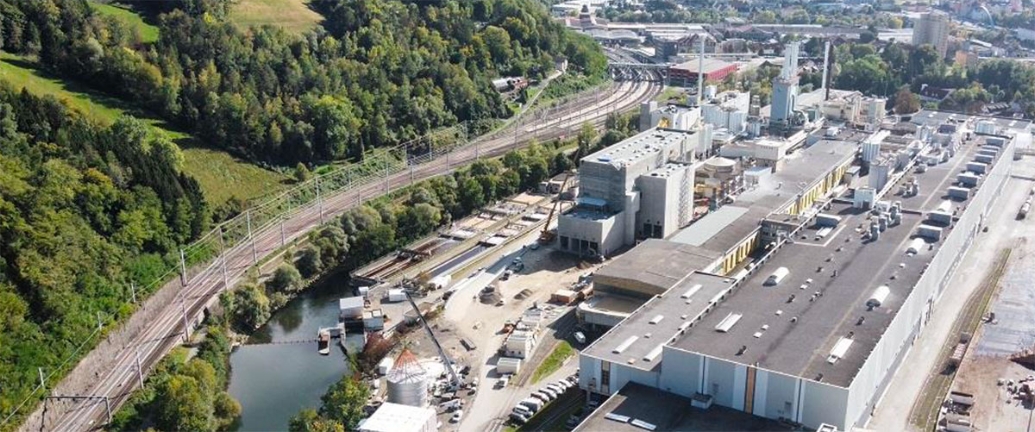
The WSK4 fluidized bed boiler at paper manufacturer Norske Skog in Bruck an der Mur is used for the thermal utilization of biogenic residues and produces around 18 t/h of live steam. With the tightening of emission limits (NOx, CO, NH₃), a comprehensive modernization was necessary to ensure operational safety and legal compliance.
Objective
The aim was to ensure long-term plant operation, compliance with the stricter emission limits and increased fuel flexibility. The implementation was to take place with minimal downtime and ongoing production.
The specific project objectives included:
- Safe compliance with the new emission limits
- Maintaining full steam & supply capacity for CHP and paper production
- Increased fuel flexibility (bark, fiber residues, fluctuations)
- Long-term operational reliability without costly boiler replacement
Implementation
1. potential study
As part of the potential study, a comprehensive analysis of the existing fluidized bed boiler was carried out in order to create a reliable decision-making basis for the optimum modernization strategy.
- Fluidized bed & system analysis
- Tests, measurement data, emission analyses (NOx, CO, NH₃)
- Evaluation of three variants for emission reduction including recommendation (combination of primary & secondary reduction for maximum flexibility)
2. modernization project
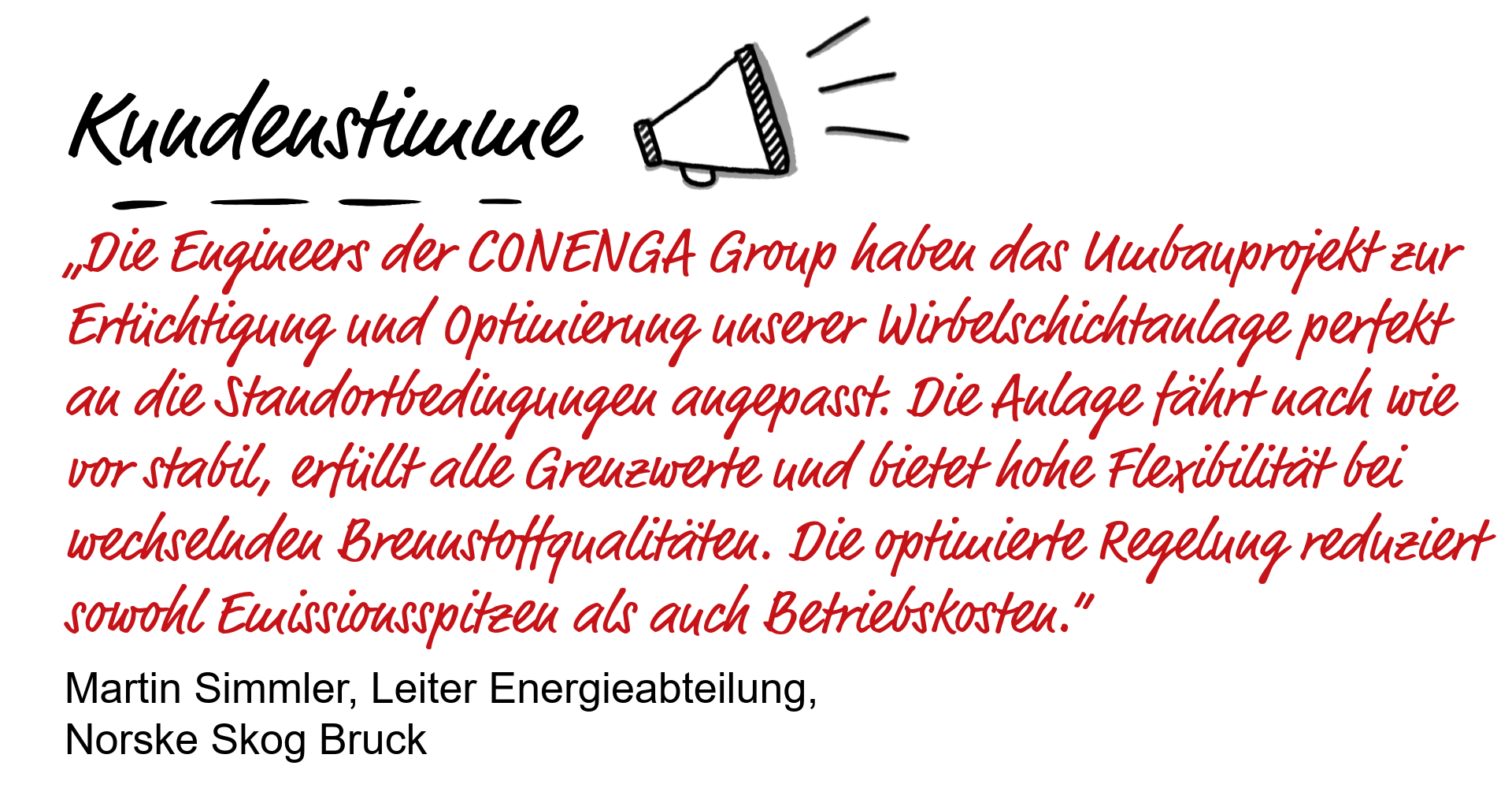
The recommended measures were implemented in a total project time of just ten months. This included a complete 3D scan of the boiler house as a basis for planning as well as comprehensive engineering and HAZOP safety analyses. In addition, the procurement, installation coordination and commissioning of the new components were undertaken and final CE conformity was ensured.
Main measures:
- Renewal of the fuel feed (bark + optional coal feed as support fuel)
- New flue gas recirculation system incl. air preheater
- Retrofitting an SNCR system for NOx reduction
- Conversion of the feeding system (double screw, conversion to feeding chutes)
- Control optimization using EPOC® boiler control
Results
- Safely below all emission limits (NOx, CO, NH₃)
- High fuel flexibility with widely varying qualities
- Reduced operating costs thanks to optimized control
- High system availability and long-term operational reliability without boiler replacement
- Modernization during ongoing operation with extremely short downtimes despite complex conversion work
- Combination of plant engineering + process optimization + digitalization
- Contribution to decarbonization & circular economy at the site



Blog post Magnes-it!
Unsere Kunden