Dynamic simulations
A dynamic simulation is the model-based simulation of an industrial process over time, in which real operating states, load changes and faults are simulated realistically. It enables the analysis and optimization of system behaviour under different conditions. Our dynamic plant simulations offer a variety of benefits in testing new control concepts, in operator training or also in a software FAT during the commissioning of a new control system.
The system simulation (as a digital twin) can be coupled with different control systems. We use the appropriate software packages and combination options such as Mimic/Emerson DeltaV, Simit/Siemens and Matlab for other control system software solutions.
Optimally, the user interface is a copy of the control system. Thus, practically no difference to the real plant is recognizable. We create your processes based on our process engineering know-how and our extensive experience in consultation with your process experts.
For existing systems, we also use historical data and can adapt the simulation very well to the real system using model identification.

Lukas Haffner
I am looking forward to answering your questions
Lukas Haffner is your expert concerning dynamic simulations!
Key Takeaways
- Dynamic simulations model industrial processes as realistic digital twins and enable detailed analyses.
- They are used to test and optimize control concepts before commissioning.
- Simulations support software functional acceptance testing (FAT), operator training, and safe commissioning without system downtime.
- By using historical data, simulations can be precisely tailored to real-world systems.
- Dynamic simulations reduce risks, detect errors at an early stage and improve the quality of control strategies.
Concrete examples
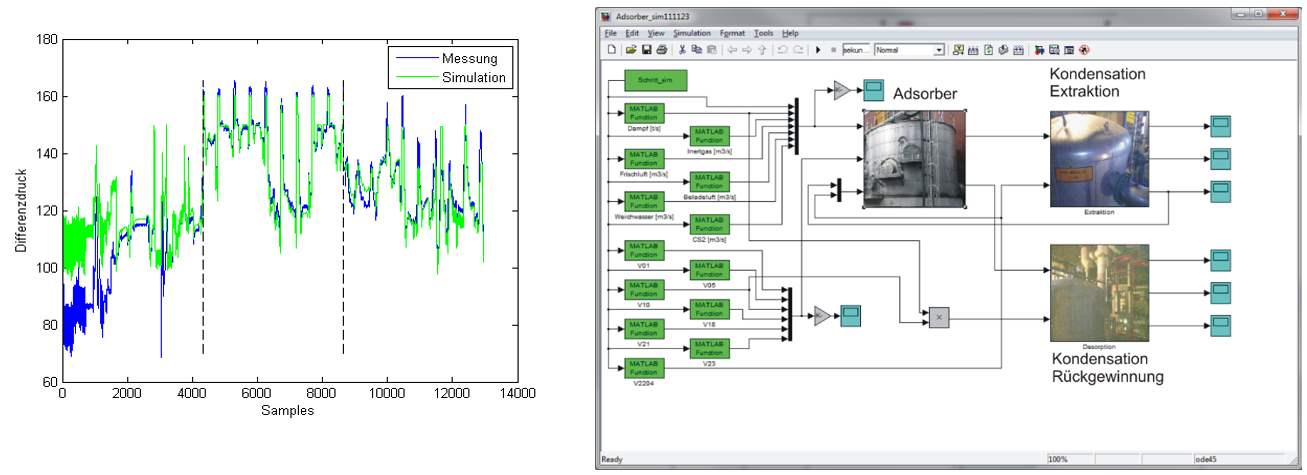
Simulation of an exhaust air desulphurisation plant for FAT software
The commissioning of the new control system had to take place during operation, as a plant shutdown means production downtime. In order to test the control system for commissioning as well as possible in advance, a software FAT was carried out with a simulation. This enabled all programming errors to be found and control concepts to be modified so that commissioning could be mastered without any problems during operation.
Simulation of the calculated savings
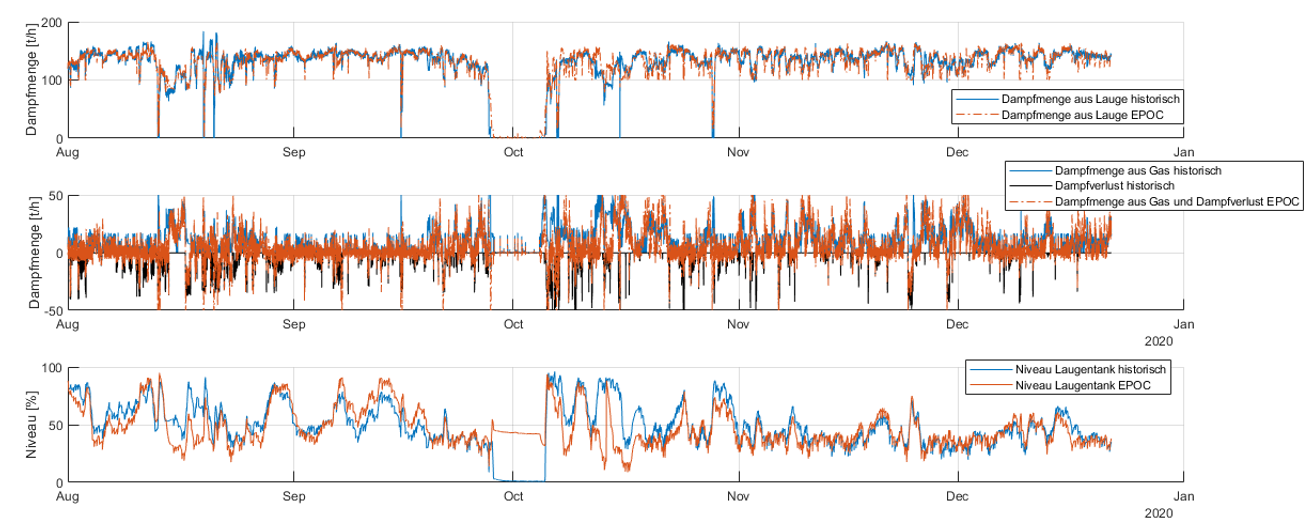
In order to validate the new EPOC® Steammanager control concept in advance and to estimate the economic potential, a Matlab simulation was created and compared with historical data. It was shown that the control concept meets the requirements of the operation with the occurring steam fluctuations of the steam consumers, which was subsequently confirmed during commissioning.
Further information:


FAQ on dynamic simulation

Unsere Kunden